


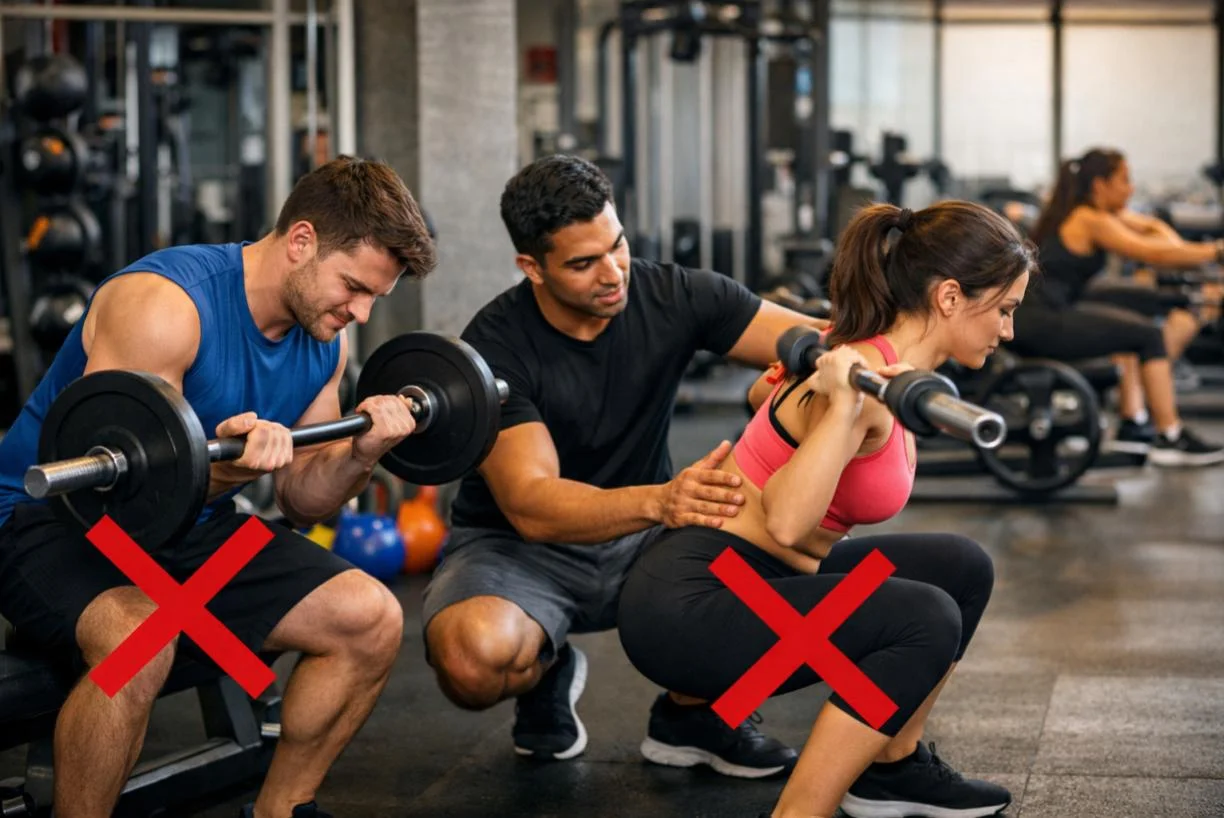
10 Everyday Exercises You’re Doing Wrong (And How to Fix Them)
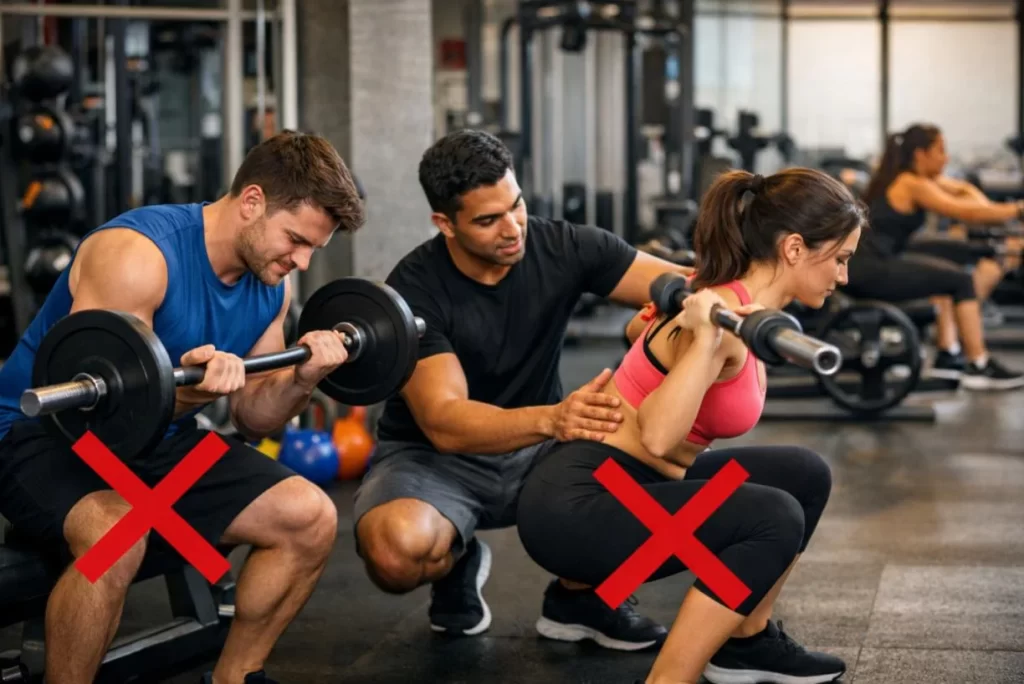
Most people don’t fail in the gym because of lack of effort.
They fail because of poor exercise form.
You can lift heavy, sweat hard, and still see slow progress — or worse, develop pain and injuries — if your mechanics are wrong.
The truth is simple: proper form activates the right muscles, protects your joints, and accelerates results.
If you fix these common exercise mistakes, you’ll build more strength, reduce injury risk, and get better results from the same workouts.
Here are 10 everyday exercises most people do wrong — and exactly how to fix them.
1. Squats
Common Mistakes:
- Knees collapsing inward
- Heels lifting off the floor
- Lower back rounding
Why This Is a Problem:
These mistakes shift stress to your knees and lower back instead of targeting your glutes and quadriceps effectively.
How to Fix It:
- Push your knees outward as you descend
- Keep your weight balanced over mid-foot to heel
- Brace your core before lowering
- Sit down between your hips, not forward
Result: Better glute activation, stronger legs, safer spine. Learn proper technique through structured Muscle Building programs.
2. Push-Ups
Common Mistakes:
- Sagging hips
- Elbows flaring out at 90°
- Incomplete range of motion
Why This Is a Problem:
This increases shoulder stress and reduces chest and core activation.
How to Fix It:
- Maintain a straight line from head to heels
- Keep elbows at about a 45° angle
- Lower until your chest lightly touches the floor
- Brace your core and squeeze your glutes
Result: Stronger chest, shoulders, and core with less injury risk. Guided Personal Training helps correct these errors faster.
3. Plank
Common Mistakes:
- Dropping hips
- Raising hips too high
- Holding position without tension
Why This Is a Problem:
This reduces core engagement and increases lower back stress.
How to Fix It:
- Slightly tilt your pelvis backward
- Pull elbows toward your toes (without moving them)
- Squeeze glutes and quads
- Breathe while maintaining tension
Result: Maximum core activation and stronger abdominal muscles. Many beginners improve faster through structured Group Training.
4. Deadlifts
Common Mistakes:
- Rounding the lower back
- Letting the bar drift away from your body
- Squatting instead of hinging
Why This Is a Problem:
This puts dangerous stress on your lumbar spine and reduces glute engagement.
How to Fix It:
- Push hips backward (hip hinge movement)
- Keep the bar close to your shins
- Engage your lats by pulling the bar toward you
- Maintain a neutral spine and proud chest
Result: Stronger glutes, hamstrings, and safer lifting mechanics. Proper coaching through professional fitness training programs ensures safe progression.
5. Lunges
Common Mistakes:
- Front knee collapsing inward
- Leaning torso too far forward
Why This Is a Problem:
This increases knee stress and reduces glute activation.
How to Fix It:
- Step forward far enough
- Keep your shin mostly vertical
- Drive through your front heel
- Keep your torso upright
Result: Better balance, stronger glutes, and healthier knees. Proper technique also supports long-term Weight Loss Training.
6. Bicep Curls
Common Mistakes:
- Swinging the weight
- Using lower back momentum
Why This Is a Problem:
Momentum reduces biceps activation and increases injury risk.
How to Fix It:
- Keep elbows pinned to your sides
- Control the lowering phase slowly
- Reduce the weight if needed
Result: Better muscle growth with safer execution. Many people refine form faster through guided Virtual Gym Training.
7. Shoulder Press
Common Mistakes:
- Excessive lower back arch
- Pressing the weight forward
Why This Is a Problem:
This increases lower back strain and shoulder injury risk.
How to Fix It:
- Squeeze your glutes
- Keep your ribs down
- Press slightly backward, not forward
- Stack wrists directly above elbows
Result: Stronger shoulders with reduced injury risk. Professional coaching ensures safer progression and better training results.
8. Rows
Common Mistakes:
- Rounding the upper back
- Shrugging shoulders
Why This Is a Problem:
This causes neck strain and reduces back muscle activation.
How to Fix It:
- Maintain a proper hip hinge
- Pull elbows toward your hips
- Pull shoulders down and back
Result: Stronger lats and better posture. Consistent coaching and feedback improve performance and prevent common training mistakes.
9. Crunches
Common Mistakes:
- Pulling on the neck
- Using momentum
Why This Is a Problem:
This strains the neck and reduces abdominal engagement.
How to Fix It:
- Keep chin slightly tucked
- Focus on bringing rib cage toward pelvis
- Move slowly and with control
Result: Stronger, more defined abs without neck strain. Structured coaching improves execution and long-term fitness progress.
10. Running (Treadmill or Outdoor)
Common Mistakes:
- Overstriding
- Slouching shoulders
- Aggressive heel striking
Why This Is a Problem:
This increases stress on knees, hips, and joints.
How to Fix It:
- Shorten your stride
- Lean slightly forward from ankles
- Land midfoot under your body
- Keep shoulders relaxed
Result: Better endurance, fewer injuries, and improved efficiency. Proper guidance ensures safe progress in both gym and online training programs.
Form Determines Your Results
Most people think they need:
- More exercises
- More weight
- More intensity
But what they really need is better execution.
When your form improves:
- Strength increases faster
- Injury risk decreases
- Muscle activation improves
- Fat loss becomes more efficient with proper training guidance
Train smart. Not just hard.
Because correct form doesn’t just protect you — it transforms your results. Get expert guidance by reaching out through the Contact Page.