


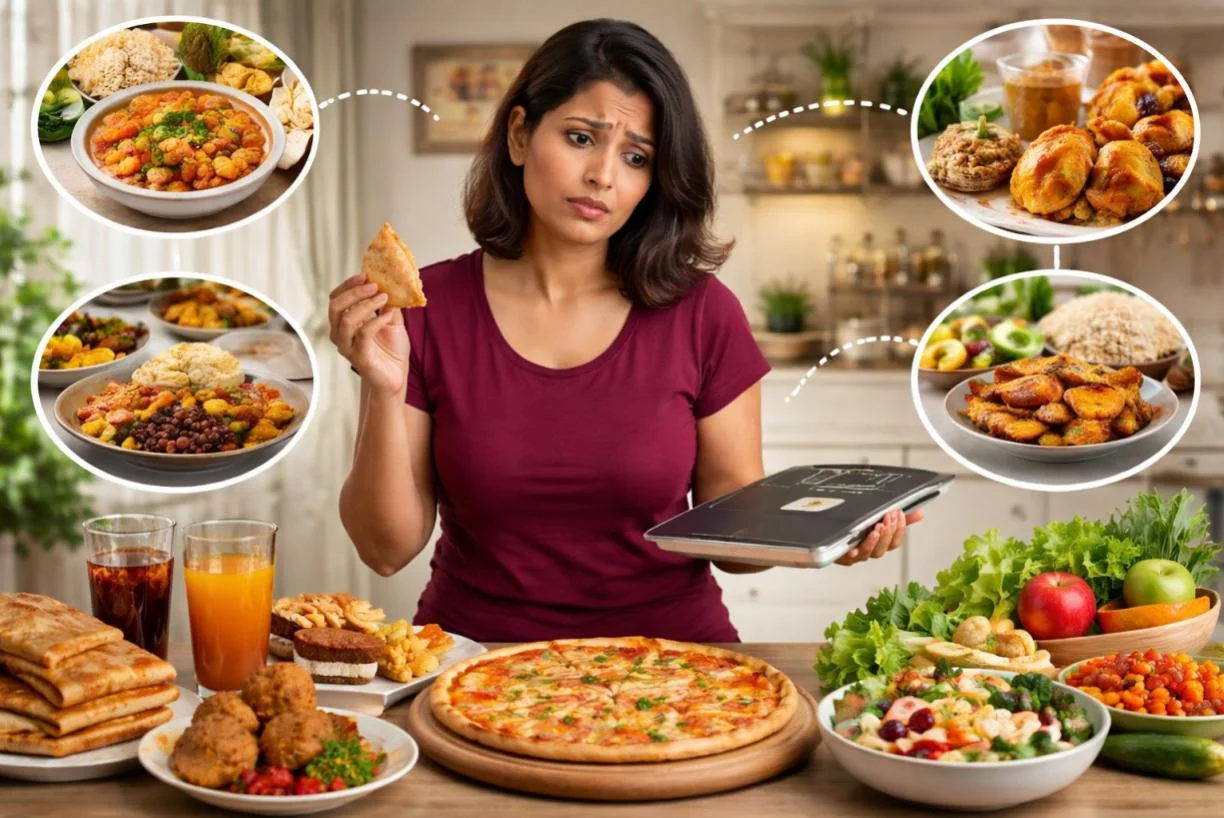
Proven Indian Diet Mistakes You Must Avoid to Lose Weight
Indian Diet Mistakes That Are Stopping Your Weight Loss
You’re exercising regularly. You’ve cut back on junk food. You’re eating homemade meals.
Yet the weighing scale refuses to budge.
If this sounds familiar, you’re not alone.
One of the biggest misconceptions about weight loss is believing that eating “healthy” automatically leads to fat loss. In reality, weight loss depends on consistently staying in a calorie deficit, and even nutritious foods can make that difficult when portions, meal balance, and daily habits aren’t managed.
The good news?
You don’t need to give up rice, rotis, dal, or your favorite homemade meals.
Traditional Indian cuisine can absolutely support healthy and sustainable fat loss. The challenge isn’t Indian food itself—it’s a few common eating habits that quietly add extra calories or leave you feeling hungry throughout the day.
In this guide, we’ll uncover 10 common Indian diet mistakes that may be slowing your progress and show you simple, realistic fixes you can start using today.
Why Most Indian Diets Don’t Automatically Lead to Weight Loss
Before diving into the mistakes, it’s important to understand one simple truth:
No single food causes weight gain or weight loss. Your overall eating pattern matters most.
Many Indian meals are nutritious, but they can become calorie-dense when portions are large, protein intake is low, vegetables are limited, or sugary drinks become a daily habit.
The goal isn’t restriction—it’s building meals that are balanced, satisfying, and sustainable.
1. Eating Healthy Foods… But Too Much of Them
Many people assume that if a food is healthy, they can eat as much as they want.
Unfortunately, calories still count.
Common examples include:
- Dry fruits
- Mixed nuts
- Peanuts
- Peanut butter
- Ghee
- Homemade laddoos
These foods are packed with nutrients, but they’re also calorie-dense. A few extra handfuls each day can quickly erase the calorie deficit needed for weight loss.
Simple Fix
- Measure calorie-dense foods instead of eating directly from the container.
- A tablespoon of peanut butter or a small handful of nuts is often enough.
Remember: Healthy foods can still contribute to weight gain when eaten in excess.
2. Drinking Your Calories
Many Indian beverages contain more sugar than people realize.
Common culprits include:
- Sweet chai several times a day
- Lassi
- Fruit juices
- Cold coffee
- Soft drinks
- Packaged “health” drinks
Liquid calories don’t satisfy hunger the same way solid foods do, making it easy to consume hundreds of extra calories without noticing for heathy weight loss.
Simple Fix
Choose:
- Water
- Black coffee
- Unsweetened tea
- Sugar-free buttermilk
- Lemon water
Even reducing one teaspoon of sugar from every daily cup of tea can make a meaningful difference over time.
3. Eating Too Many Refined Carbohydrates
Many Indian meals rely heavily on:
- White rice
- White bread
- Maida-based foods
- Biscuits
- Namkeen
- Instant noodles
These foods digest quickly, causing blood sugar to rise and fall rapidly, which often leaves you hungry again sooner.
Simple Fix
Instead of avoiding carbohydrates completely:
- Add vegetables to every meal.
- Include a quality protein source.
- Choose whole grains more often.
- Watch portion sizes.
Carbohydrates aren’t the enemy. Poor meal balance is.
4. Not Eating Enough Protein
This is one of the most common Indian diet mistakes and one of the biggest reasons people struggle to lose fat.
A typical Indian meal often looks like this:
- Rice or rotis
- Sabzi
- Small serving of dal
While nutritious, it may not provide enough protein to preserve muscle or keep you feeling full.
Low protein intake can lead to:
- Increased hunger
- Muscle loss during dieting
- Poor recovery
- Lower satiety
Simple Fix
Aim to include protein in every meal.
Excellent Indian protein sources include:
- Eggs
- Chicken
- Fish
- Paneer
- Greek yogurt
- Curd
- Tofu
- Soya chunks
- Dal paired with dairy or legumes
A general target of 20–30 grams of protein per meal works well for many adults, although individual needs vary depending on age, activity level, and goals.
5. Turning Cheat Days Into Cheat Weekends
Many people stay disciplined Monday through Friday, only to undo their progress over the weekend.
Restaurant meals, desserts, alcohol, and late-night snacking can easily wipe out the calorie deficit built during the week.
Simple Fix
Instead of an entire cheat day:
- Enjoy one planned indulgent meal.
- Eat balanced meals for the rest of the day.
- Focus on moderation rather than perfection.
Consistency beats perfection every time.
6. Mindless Snacking Throughout the Day
Hidden calories often come from foods we barely remember eating.
Examples include:
- Extra biscuits with tea
- Chips
- Tasting food while cooking
- Chocolate
- Leftovers from your child’s plate
Individually they seem harmless. Together, they can add several hundred calories every day.
Simple Fix
When you’re genuinely hungry, choose satisfying snacks like:
- Greek yogurt
- Roasted chana
- Fruit with curd
- Boiled eggs
- Cottage cheese (paneer)
Mindful eating makes calorie control much easier.
7. Assuming Homemade Means Weight-Loss Friendly
Home-cooked meals are usually healthier than restaurant food.
But calories don’t disappear simply because food is homemade.
Items such as:
- Poori
- Paratha
- Pakoras
- Halwa
- Fried snacks
can still be high in calories.
Simple Fix
- Enjoy traditional foods without guilt—but pay attention to portion size and frequency.
- Weight loss shouldn’t mean giving up your culture or favorite recipes.
8. Not Eating Enough Vegetables
Many Indian meals contain only a small serving of vegetables while rice or rotis dominate the plate.
Vegetables:
- Increase fullness
- Add fiber
- Improve digestion
- Provide essential vitamins and minerals
…all while being relatively low in calories.
Simple Fix
- Fill half your plate with vegetables before adding rice or rotis.
- It’s one of the easiest ways to naturally reduce calorie intake without feeling deprived.
9. Eating Too Quickly
Busy schedules often mean finishing meals in just five or ten minutes.
However, your brain needs around 20 minutes to recognize fullness. Eating too quickly makes overeating much more likely.
Simple Fix
Slow down by:
- Chewing thoroughly
- Putting your spoon down between bites
- Avoiding phones or TV while eating
Small changes in eating speed can have a surprisingly big impact on calorie intake.
10. Relying on Exercise Alone
Many people believe a tough gym session gives them permission to eat whatever they want.
The reality? It’s much easier to eat 700 calories than burn them.
Exercise is essential for:
- Preserving muscle
- Improving fitness
- Supporting heart health
- Increasing daily energy expenditure
But nutrition remains the biggest driver of fat loss.
Simple Fix
Build every meal around:
- Protein
- Vegetables
- Whole grains
- Healthy fats in moderation
Then support your nutrition with regular strength training and daily movement.
Build a Better Indian Weight Loss Plate
Instead of eliminating the foods you love, build meals using this simple formula:
- 🥩 ¼ plate protein
- 🍚 ¼ plate rice or rotis
- 🥗 ½ plate vegetables
- 🥜 Healthy fats in moderation
- 💧 Drink mostly water
This balanced approach is sustainable, satisfying, and works well with traditional Indian meals.
Key Takeaways
If you remember only five things from this article, make them these:
- Prioritize protein at every meal.
- Control portions of calorie-dense foods.
- Drink fewer sugary beverages.
- Fill half your plate with vegetables.
- Stay consistent—even on weekends.
Small habits may seem insignificant on their own, but together they determine your long-term results.
Final Thoughts
The biggest obstacle to weight loss isn’t Indian food.
It’s the everyday habits that quietly increase calorie intake—oversized portions, low protein, sugary drinks, mindless snacking, and inconsistent weekends.
You don’t need expensive diet plans, detox teas, or extreme restrictions.
Instead, start with one simple change this week:
- Add protein to breakfast.
- Reduce sugary drinks.
- Measure calorie-dense foods.
- Eat more vegetables.
- Stay consistent through weekends.
These small improvements, repeated consistently, lead to lasting results.
Remember: The best diet isn’t the one that works for two weeks—it’s the one you can happily follow for years.
FREQUENTLY ASKED QUESTIONS
All the essentials to get started!
Common mistakes include overeating calorie-dense foods, drinking sugary beverages, eating too little protein, relying heavily on refined carbohydrates, mindless snacking, and overeating on weekends. These habits make it harder to maintain the calorie deficit needed for fat loss.
Home-cooked meals can still be high in calories if portions are too large or they contain excess oil, ghee, fried foods, or sweets. A balanced plate with adequate protein, vegetables, and portion control is essential for sustainable weight loss.
Frequently eating fried snacks, sweets, sugary drinks, biscuits, namkeen, refined flour products, and oversized portions of rice, rotis, nuts, or ghee can increase calorie intake and slow fat loss when eaten regularly.
Absolutely. You can continue enjoying traditional Indian meals by adding more protein and vegetables, controlling portions of rice and rotis, limiting sugary drinks, and practicing mindful eating. Sustainable changes are far more effective than eliminating entire food groups.
Focus on eating protein with every meal, filling half your plate with vegetables, choosing whole foods most of the time, drinking enough water, eating slowly, and staying consistent with both nutrition and strength training.






Comments are closed